01
Interconnection
Queue position, network upgrades, deliverability, and changing study assumptions can alter schedule and economics.

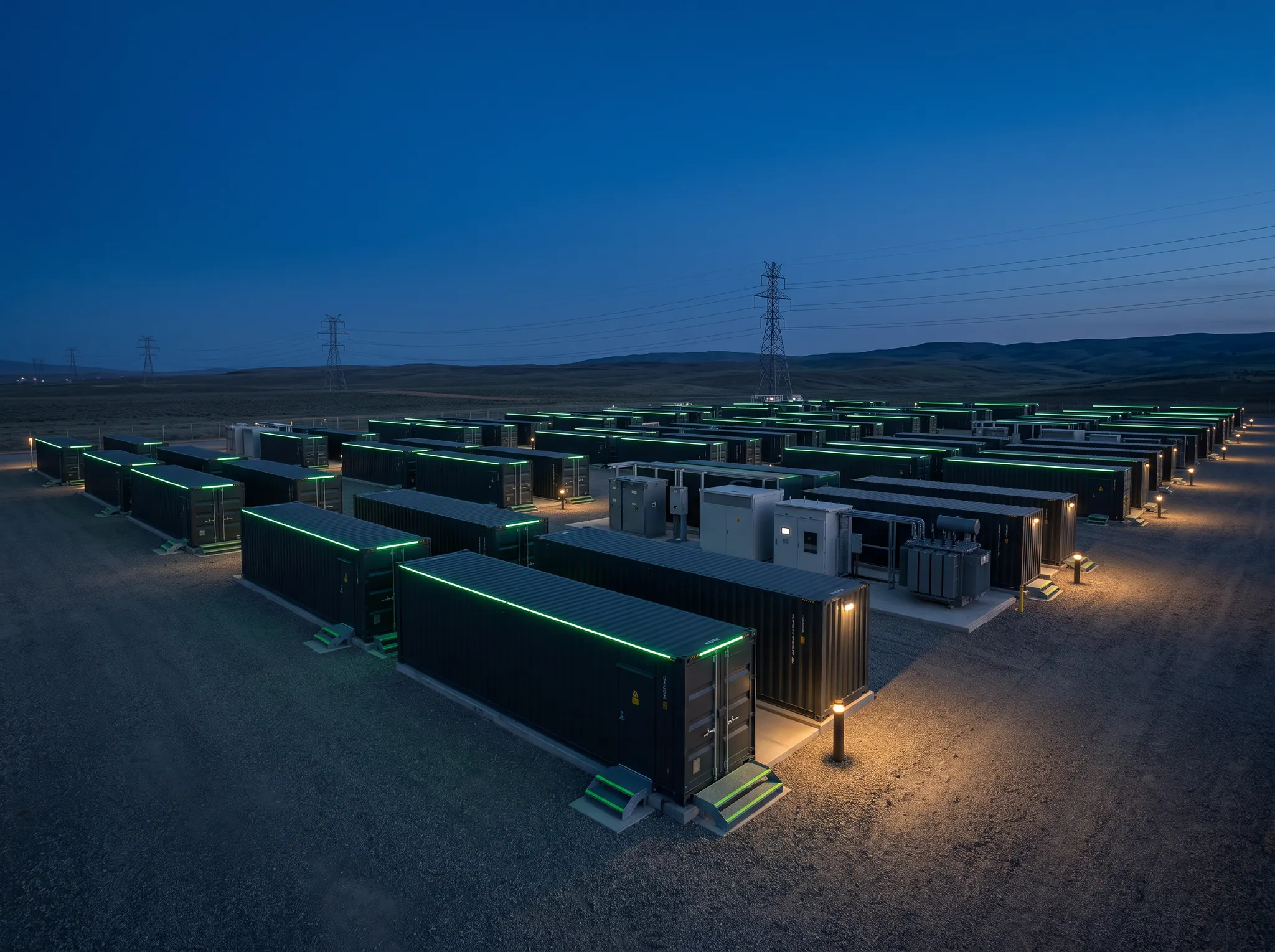
Area of interest · Grid-scale storage
Grid-scale storage is utility-scale energy storage, usually batteries, that charges from the power grid and discharges back to it when power is needed. Fast growth does not make every storage project financeable. Location, interconnection, market rules, dispatch, contracts, degradation, and capital all shape the real opportunity.
Dependency to move
Interconnection, revenue, dispatch, and equipment obligations in one thesis.
Milestone
A project-specific value stack that can withstand financing diligence.
Counterparties
Utilities, grid operators, integrators, optimizers, insurers, and lenders.
Market context
U.S. utility-scale battery storage exceeded 26 GW at the end of 2024 after operators added 10.4 GW during the year, according to EIA.
Storage can shift energy, support reliability, and complement renewable generation. Project value, however, depends on node, interconnection position, market rules, charging source, duration, dispatch, degradation, contracts, and cost of capital.
Project reality
01
Queue position, network upgrades, deliverability, and changing study assumptions can alter schedule and economics.
02
Energy arbitrage, ancillary services, capacity, tolling, and contracted availability carry different merchant and counterparty risks.
03
Warranty coverage, degradation, augmentation, availability, integration, and supplier credit must match dispatch expectations.
04
Fire protection, emergency response, local review, cybersecurity, and end-of-life planning need early attention.
05
Rules for charging, state of charge, accreditation, and compensation continue to change.
Sharon Creek approach
Sharon Creek can pressure-test interconnection and revenue assumptions, align dispatch with equipment and warranty constraints, define downside cases, and organize the commercial milestones that support a credible financing process. The objective is a development case that explains not only why storage is growing, but why this project, at this location, with these contracts and operating assumptions, can work.
Test your storage thesisWhy Sharon Creek
St. Bernard became buildable by aligning site, permits, technical design, interconnection, contracted market access, capital, and construction planning. For storage, that translates to connecting queue position, revenue structure, dispatch assumptions, equipment obligations, permitting, and financing before diligence exposes the gaps.
See the St. Bernard development proofDocumented founder proof
Sam Schutte originated the St. Bernard concept in 2016 and led Synthica Energy as CEO and co-founder through its July 2023 groundbreaking and into commissioning.
1Project cost as reported by RETTEW, the facility’s lead design engineer: RETTEW, “St. Bernard Organics-to-Energy Facility”
Why Sharon Creek: storage projects also depend on founder-level integration across site, interconnection, contracted market access, equipment obligations, permitting, construction planning, and capital.
Choose the decision path
Advise
Connect interconnection, revenue, dispatch, equipment, permitting, and financing into a diligence-ready project case.
Discuss capital strategyFund in formation
Discuss how storage development fits the thesis behind a fund in formation; no offering or deployment is implied.
Discuss the fund thesisIf your storage project needs a clearer line from market opportunity to contract structure and capital readiness, Sharon Creek can help test the thesis.
Test your storage thesisSources
capacity and growth
integration, market, security, and regulatory challenges